Wednesday, July 23, 2014

The Diet for healthy babies

I have had a lot of questions about what to eat to increase your chances of getting pregnant, what to eat when you are pregnant, and what to eat to increase your milk production for breast feeding.  In Sally Fallon's book, The Nourishing Traditions Book of Baby and Child Care,  she explains what foods to eat and what foods to avoid before, during, and throughout the baby's life.

Here is her list of foods to include:

  • Cod liver oil  to supply 20,000 IU vitamin A and at least 2000 IU vitamin D per day.
  • 4 cups of whole raw milk dairy and/or 5-6 ounces of raw cheese
  • At least one egg daily, preferably from pastured chickens, with as many addition yolks as possible added to smoothies, salad dressings, scrambled eggs, custards, homemade ice cream,
    etc. 
  • 4 tablespoons of ghee or butter daily, preferably from pasture-fed cows
  • 2-4 ounces fresh liver (beef, lamb, chicken, duck, turkey, goose) at least two times per week, preferably form pastured animals.
  • Fresh seafood, two to four times/week, particularly fish eggs, shellfish, oily fish like sardines, and wild salmon. 
  • Fresh beef, pork, or lamb daily, always consumed with fat. 
  • Oily fish or lard daily, for vitamin D
  • 2 tablespoons coconut oil daily, used in cooking, smoothies, or melted in hot water
  • Lacto-fermented condiments and beverages 
  • Bone broths used in soups, stews, and sauces
  • Properly prepared whole grains, legumes, and nuts
  • Fresh vegetables and fruits, preferably organic and in season
  • Unrefined salt 

Tuesday, June 24, 2014

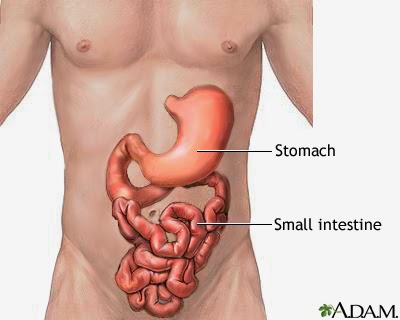
Digestion is a North to South Process

Digestion is a north to south process.  Here is how it works: 


  • Digestion starts in the brain with the sight and smell of food.  This signals the body to start producing salivary amylase (digestive enzyme found in the mouth that starts the breakdown of carbohydrates).   
  • It then continues in the mouth where the mechanical and chemical breakdown occurs.  The mechanical breakdown is the teeth chewing your food into smaller parts.  The chemical part is the salivary glands moisten the food to help with swallowing.  
  • When you swallow, bolus enters the esophagus for passage into the stomach.  The cardiac sphincter at the bottom of esophagus opens to allow bolus to pass into the stomach.  
  •  The stomach continues the mechanical  breakdown of food by churning and massaging the bolus along with a  number of chemical activities.  Bolus mixes with hydrochloric acid to disinfect any food that possibly had any pathogens that could have gotten in via food.  When the
    bolus reaches its specific pH it becomes chyme and leaves the stomach via the pyloric valve.  
  • The chyme enters the duodenum of the small intestine.  If you'v eaten fat the gallbladder will release bile into the duodenum.  The pancreas will release bicarbonate to alkalinize the chyme and will also release digestive enzymes to further breakdown food.  The chyme is now ready to move to a different part of the small intestine, the jejunum and the ilium where it will be absorbed into the blood stream.  
  • Whatever is not absorbed into the blood will to through the illiocecal valve into the large intestine.  In the first portion of the large intestine bile and saliva will by recycled in the ascending colon.  Stools and feces will form in transverse colon into sigmoid colon where it will then be excreted from the body.  


What happens when digestion doesn't work properly: 

  • As a culture we are tend to be in a stressed out state when we consume food.  In order to properly digest food you have to be in a relaxed state also known as a parasympathetic state.   When you are eating on the run or while you are in the middle of work you are not in a relaxed state, also known as a sympathetic state.  When you are eating in a sympathetic state you do not produce enough stomach acid.  Stomach acid is crucial do digestion in the small intestine.  
  • When people eat then tend to be rushed or extremely hungry and do not take the time to thoroughly chew their food.  When food is not chewed all the way through, the amount of saliva produced is hindered.  When the proper amount of saliva is not produced, salvatory amalyse is not produced which starts the breakdown of carbohydrates in your body.   
  • Factors such as stress, refined carbohydrates, nutrient deficiencies, allergies, and excess alcohol consumption can all inhibit hydrochloric acid production.  In order for food to continue with digestion, the pH of the stomach should be between 1.5-3.0.  If the chyme is to alkaline, it stays in the stomach longer and begins to degenerate, pancreatic juices are not released and intestinal problems start to occur. 
  • In the gallbladder when poor quality fats or no fat is consumed the gallbladder fills up with bile and can cause gallstones.  
  • The large intestine deals with the leftover food that is not fully digested, food full of parasites, microorganisms, and undigested fats.  Maldigested food causes dysbiosis and disrupts healthy flora.  Without healthy flora butric acid is not produces which weakens the health of the colon.  This leaves the colon subject to inflammation, diverticula, and loss of tone which can then lead to issues such as IBS, Crohns disease, colitis, and celiac disease .

To avoid any of these issues from occurring, you want to make sure you are properly digesting your food by always eating in a relaxed state, chewing your food all the way through, avoid refined carbohydrates, limit your alcohol intake, and manage your stress.  

Wednesday, May 14, 2014

Grain Free Apple Banana Bread

So for those of you who cut out grains, but still miss having a YUMMY piece of bread, this recipe is for you.  I made this last night and LOVED it.

Grain Free Apple Banana Bread
2 Apples- I used Pink lady apples
2 ripe bananas (organic so they should be smaller, if not just use 1 big one)
4 eggs
1/2 cup cashew butter
4 Tablespoons of coconut oil
1/4 cup pure maple syrup
1 Tablespoon cinnamon
1 teaspoon baking soda
1 teaspoon baking powder
1 teaspoon vanilla
pinch of salt

Preheat oven to 350 degrees.  In food processer or Vitamix blend apples and bananas.  Add to large mixing bowl.  Beat eggs in small bowl and add to mixing ball with fruit puree.  Add cashew butter, coconut oil, maple syrup to bowl and mix with emersion blender.  With a wooden spoon mix in remaining ingredients.  Place batter in greased (with coconut oil) 9x5" loaf pan.  Bake for 40 minutes.  Let sit for 15 minutes before cutting into it.  Refrigerate the remainder.  I think it tastes better the next day!  ENJOY!

Tuesday, May 6, 2014

The truth about fat free and low fat milk and yogurt

While I was away in Nicaragua I decided I wanted to start reading Sally Fallon and Mary Enig's book, Eat Fat, Lose Fat.  I am really enjoying it so far and have learned some interesting things.  One of them being about oxidized cholesterol.  Oxidized cholesterol is cholesterol that has been damaged by heat and oxygen during the process of heating. Oxidized cholesterol is what causes plaque build up in
the arteries.  Guess what manufacturers put in fat free and low fat milk and yogurt to give them a more appealing texture?  Powdered milk and powdered eggs which contain oxidized cholesterol! So next time you are at the grocery store I hope you will think twice about grabbing fat free or low fat dairy products and go for the FULL FAT! Now this is not to say that all cholesterol is bad for you.  In fact, naturally occurring cholesterol has the reverse effect and can help heal arterial damage.

Wednesday, April 23, 2014

The Importance of Water

Everyone has always been told to drink at least 8 glasses of water per day.  I find that in order for people to follow dietary advice it is important for them to know WHY.

Facts about water: 

  • Water is the most important nutrient in the body.  You can only go days without water, whereas you can go about 8 weeks without food.  
  • Water makes up 55-60% of our total body mass, it is found in all tissues, cells and body fluids.  
  • Our body can produce 8% of daily water needs, but 92% has to be ingested through food and drinks we consume.  
  • Processed foods take moisture out of food and we ended up losing water when consuming them. 
  • The slower you drink water, the more you'll retain it.  Don't chug water- you kidneys are overly efficient and will excrete most of it instead of absorbing it.  
  • If you drink over a gallon of water without any electrolytes you will become dehydrated.  
  • Water cannot be stored, that is why it is very important to have a daily consumption of water.  
How much water should I drink? 
  • Body Weight (pounds)/2 = the minimum number of ounces you should drink each day. 
Roles of Water in the body:
  • Improves Oxygen delivery to cells
  • Transports Nutrients
  • Enables cellular hydration
  • Moistens oxygen for easier breathing
  • Cushions bones and joins
  • Absorbs shocks to joins and organs
  • Regulates body temperature
  • Removes wastes
  • Flushes toxins
  • Prevents tissues from sticking
  • Lubricates joints
  • Improves cell-to-cell communications
  • Maintains normal electrical properties of cells
  • Empowers the body's natural healing process

Sunday, April 20, 2014

Easter- Deviled Eggs, homemade mayonaise, kale and artichoke yogurt dip, and chocolate chip cookies

For Easter I had my parents over for an Easter brunch.  I wanted to share with everyone what I made so you too can manage to have healthy items on the table during the holidays. 

For appetizers I made deviled eggs and a veggie plate with a kale and artichoke dip.  

Deviled Eggs:

  • 8 organic, cage free eggs (I used the ones from our Farmer's Share, Stillman Farm)
  • 1/3 cup Easy Homemade Mayonaise
    • 1 egg
    • 1 cup of Unrefined Cold Pressed Avocado Oil or Unrefined Cold Pressed Lighter
      tasting Olive oil.  (I used avocado oil for this recipe)
    • 1/2 teaspoon of mustard
    • 1/2 teaspoon of Celtic Sea Salt 
    • 1.5 teaspoons of fresh organic lemon juice
    • Mason Jar
    • Immersion blender
    1. Start with cracking an egg into a mason jar.  Let it set for about 30 seconds. 
    2. Add mustard, salt and lemon.  
    3. Add Oil.  Let sit for about 30 seconds, or until the egg goes to the bottom of the jar.  
    4. Insert Immersion blender on medium high, starting at the bottom of the jar and then slowly moving it up so everything in the jar turns into Mayonaise.  SO EASY!
  • Paprika 
  • Pot for cooking eggs

  1. Place eggs in pot.  Cover with water and then place a lit on it. Bring to boil.  Once at a boil remove from heat and let stand for 12 minutes.  
  2. Remove eggs from pot.  
  3. Remove shell by running them under cold water. 
  4. Cut all of them in half lengthwise.  
  5. Scoop out the yolks and place in bowl with mayonaise, salt and pepper to taste.  
  6. Mix well until most of the clumps are removed.  
  7. Scoop mixture into eggs and top with a dash of paprika.  
Kale and Artichoke Yogurt Dip
  • 8 leaves of kale with stem removed and chopped
  • 1 shallot
  • 1 garlic clove
  • 1 Tablespoon of Ghee
  • I can of artichokes 
  • 1 cup of whole fat grass fed yogurt 
  • 1/2 of fresh organic lemon juice
  1. Heat pan to medium high heat.  Add Ghee, shallot, kale, and artichokes.  Cook for 3 minutes.  Add minced garlic, saute until fragrant.
  2. Add Sauteed vegetables, 1 cup of grass-fed yogurt, and lemon juice to Vitamix. Blend on the hot soup setting.  
  3. Serve with chopped up organic carrots, yellow and red peppers, and broccoli.  
I got this recipe from one of the group leaders, Mary, in my NTA class.  She served them at our first workshop weekend and they were delicious! Click on Mary's Chocolate Chip Cookies for the recipe.  
Mine looked like this, but of course I forgot to take a picture and there are none left!


Friday, April 18, 2014

Homemade Coconut Milk

Have you ever looked at the carton of store bought coconut milk, almond milk, or any other non-dairy milks? Has anyone ever told you if you cannot pronounce it, you probably should not eat it? Here is an coconut milk from The Healthy Foodie.
amazing homemade and cost effective

Alternatively, you can do the following:
4 cups of warm water
2 cups shredded coconut


  1. Place in blender for 5 minutes (or 2 rounds of the Vitamix)
  2. Strain with cheese cloth as the The Healthy Foodie does.