Wednesday, January 6, 2016

Intervals on the treadmill

I decided to do speed on the treadmill on Monday because I had done booty bar at Precision Pilates on Sunday and I knew I was going to take Yoga at Mantra Yoga.  I put Griffin in the daycare at the Manchester Athletic Club Monday most days and he loves it!  He goes for about 2 hours and plays with the other kids the entire time.  I love all of the staff there, he has been going since he was 7 weeks old.  Here is the workout I did (it took me about 40 minutes):

10 min warm up 
5 min 8.5 mph, each minute 1%,2%,3%,4%,5% 
1 min recovery jog 7.5mph 
4 min 8.6 mph, each minute 1%,2%,3%,4% 
1 min recovery jog 
3 min 8.7 mph, each minute 1%,2%,3% 
1 min recovery jog 
2 min 8.8 mph, each minute 1%,2% 
1 min recovery jog 
1 min 9.0 mph, each minute 1% 
1 min recovery jog 
The following were all done at 1% incline
1 min 9.2mph 
1 min 7.5 
45 seconds 9.4 
45 seconds 7.5 
30 seconds 9.6 
30 seconds 7.5 
15 seconds 9.8 
15 seconds 7.5 
Walk 2 minute cool down

You don't have to go at the same speed as me, go at your own pace.  My goal was to start at half marathon pace and finish around 5k race pace.  

If you REALLY hate doing intervals on your own and want motivation I would highly recommend doing RunFit at The Manchester Athletic club.  It is such a great workout and the instructors are very knowledgable and motivating.  

Good luck! 

Monday, January 4, 2016

Chia Seed Pudding

Cashew milk
1 cup soaked cashews.  Let cashews soak in water for 1-3 hours.  Drain well until water runs clear. 
4 cups coconut water
3-4 drops stevia or 1-2 tablespoons maple syrup 
1 teaspoon vanilla extract
1 teaspoon cinnamon
Blend in Vitamix or another high powered blender

Chia Seed Pudding
Mix 2/3 cup chia seeds 
3 cups cashew milk 
Mix in large bowl then put in separate smaller bowls.  Refrigerate for at least 6 hours.  
Optional: add goji berries, fresh berries, cocoa nibs, shredded coconut.

Our meal plan for the week

I find that whenever I meal plan we eat a lot healthier and we end up spending a lot less money.  Writing the plan can take time, but in the end you end up saving money.  I started this list in the Notes section of my iPhone and added to it throughout the day.
After you meal plan and grocery shop the next thing is to start prepping.  Some meals are best if cooked that day, but it makes it so much easier if you chop all the vegetables ahead of time.  I pick two prep days, Sunday and Thursday.  I did a lot of the prep last night while I was cooking our beef tacos.  Here is our meal plan for the week: 
Chia Seed Pudding with Strawberries

Monday Breakfast: chia seed pudding with strawberry puree
Monday lunch: leftover beef tacos with avocado and cherry tomatoes
Monday Dinner: Sweet and sour salmon with green beans
Tuesday breakfast: chia seed pudding with strawberry puree 
Tuesday lunch: leftover salmon
Tuesday dinner: Chicken fajitas (lettuce wraps)
Wednesday breakfast: frittata 
Wednesday lunch: chicken fajitas leftovers
Wednesday dinner: Garlic shrimp with roasted asparagus and roasted potatoes
Thursday breakfast: bacon spinach tomato frittata 
Thursday lunch: leftover shrimp and potatoes
Thursday dinner: Slow Cooker Chili (freeze half for next week)
Friday breakfast: bacon spinach tomato frittata 
Friday lunch: chili
Friday dinner: Chili with avocado and green onion
Beef Tacos in lettuce wraps with cherry
 tomatoes and avocado
Saturday breakfast: scrambled eggs with spinach and tomatoes
Saturday lunch: tuna salad in lettuce wraps
Saturday dinner: mustard steak with broccoli and sweet potato fries
Sunday breakfast: hard boiled egg and banana
Sunday lunch: Tuna salad over a garden salad


Here is my grocery list! Not sure if this would be helpful to you, but I thought I would add because I write my grocery list in order of how things are at the Whole Foods I go to.  I already have a lot of the items to make these meals in my pantry, so you may not see things like coconut milk, olive oil coconut oil, coconut aminos, chia seeds, coconut water, and spices.
Sweet pots
Onions
Garlic
Spinach
Bib lettuce 
Cherry Tomatoes
3 Red pepper
3 Yellow pepper
Raspberries
Strawberries
Asparagus
Green beans
Carrots
Celery
Potatoes
Green onion
Avocado
Broccoli
Banana
Cashews
Eggs
Bacon
Shrimp
Chicken
Salmon
Skirt Steak

Sunday, January 3, 2016

My pathway to optimal health


Happy New Year everyone! One of my New Year's Resolutions is to start blogging again. My goal is to write about different nutrition topics, post meal plans, post my favorite recipes, post workouts, explain how I fed my son and why he is an adventurous eater at 14 months, and any other topics that you suggest. Here is my story on how I got to where I am today.
Me and my son, Griffin summer 2015

After graduating from Colby-Sawyer College with a degree in Exercise Science, I began my profession as a personal trainer. After five years of training at Manchester Athletic Club, I brought my career to Equinox in Boston where my knowledge and enthusiasm for exercise and nutrition blossomed. After working with Marnie Lawler, who is a certified Nutritional Therapist, I was able to heal my ongoing issues which then inspired me to earn a certification as a Nutritional Therapist from the Nutritional Therapy Association.
My passion for health and well-being stems from my own experiences.  Through childhood and adolescence, I struggled with anxiety and depression, an eating disorder, severe gastrointestinal issues, and focusing in school.  Growing up, my parents strived to feed my family a healthy diet.  The majority of our meals were cooked at home, and we were not allowed to have soda, junk food, or sugary cereals.  Everyone in my family was very active and my parents thought the best way to support an athletic lifestyle was to consume carbohydrates (they were mostly refined); at the time, they believed they were embracing a healthy diet.  During my high school years, my anxiety and depression became debilitating and, in search for a sense of control, I developed an eating disorder.  I was also finding it difficult to focus in school and as a result was losing motivation to succeed.  I talked to my doctor about how I was feeling and was prescribed medication.  At each yearly check-up, I would report to the doctor that my struggles were only worsening, which just lead to increased doses and/or stronger medications.  Never once did the doctor address diet, and by the time I entered college I was on four different medications that did not seem to be helping.  It was then that my journey to self-heal began.  I replaced my medication with exercise.  I found that a dedication to daily workouts allowed me to gain some better control over my anxiety and depression, my digestion, my overall focus, and my relationship with food.  
Fall 2015 6K at Franklin Park.  It's amazing how great you feel
during competing when you eat well.
While exercise was an essential piece to my puzzle, my journey to feel truly healthy was not yet solved.  After college- though many of my struggles had been improved with exercise- I was still finding myself eating when I felt anxious or depressed.  In turn, I started putting on some weight and my clothes were no longer fitting.  I thought the solution was to further increase my exercise, so I became motivated to begin competing in marathons and triathlons.  After placing in my age group within the first few races, I was hooked.   I became very competitive in my endurance events,  but during the years of competing I suffered several injuries as a result of over-training.   During a bike ride with Marnie, they got to talking about nutrition and how she had used nutrition to heal a lot of my own family’s issues.  I ultimately discovered the final link to optimal health was to improve my nutrition.  I worked on my diet, and after several years, I was able to more effectively improve my anxiety and depression, heal my gut, clear up my complexion, improve my energy, prevent injuries, and improve my race times.  After achieving such astounding results, I was inspired to pursue my own certification in Nutritional Therapy so I too, could help others heal themselves through nutrition.  I now enjoy teaching people how they can feel better every day by nourishing their body with real food and exercise.  

Wednesday, September 10, 2014

Importance of fats when it comes to injuries

 When you are an athlete you tend to get injured no matter what the sport you are playing.  For endurance athletes it usually tends to be overuse.  Prostaglandin function is when the body inflames and anti inflames in order to maintain homeostasis.  Prostaglandins are hormone like substances the body cannot do without.  They occur in nearly all body tissues and fluids and are made from elongated forms of essential fatty acids and are synthesized in cell membranes.  To control the inflammatory function the body needs to inflame and anti-inflame; the body inflames to heal before it anti-inflames.  This is occurring all of the time when you are training, especially high volume training.  In order for normal prostaglandin function to occur the body needs omega 3-fatty acids, omega-6 fatty acids, and saturated fat.  Omega-3 and 6 fatty acids help the body to anti-inflame and saturated fats help the body inflame.  Both of these processes are crucial to the healing process.  Most Americans are trying to avoid all fats in their diet all together and they are ending up injured all the time, have chronic headaches and migraines, or end up with an anti-inflammatory disease.  It is crucial for endurance athletes especially to consume all three types of fats because when they are training they are using mostly fat as fuel.  Here are examples of all three types of fats:
  • Omega-3
    • grass-fed beef
    • anchovies
    • salmon (WILD!)
    • blue fish
    • lake trout
    • sardines
    • mackerel
    • herring
    • flaxseed oil
    • wheat germ
    • walnut
    • hemp
  • Omega-6
    • Organic avocados 
    • soaked and sprouted nuts
    • Cold pressed olive oil
    • black currant seed oil
    • flax seed oil
    • evening primrose oil
  • Saturated fats
    • grass-fed butter
    • coconut oil
    • grass-fed ghee
    • grass-fed beef
    • organ meat
    • dairy
    • shellfish
Some things to consider are:

  • Most people tend to overeat omega-6 fatty acids.  It is very important to consume equal amounts of all three in order for proper healing to occur.  
  • Industrialization is another contributing factor to fatty acid deficiency.  Grain fed is completely void of omega-3's, whereas grass-fed beef is not.  
  • Adultered Fats: hydrogenated fats, highly processed vegetable oils (CANOLA OIL!), partially hydrogenated fats.  Trans fats are the by-products of hydrogenation and are very toxic.  They interfere with proper prostaglandin formation. 
  • Supermarket oils: Living fats and oil are very sensitive to light, heat, and oxygen and become rancid very easily.  The more unsaturated it is, the more unstable it is.  Unstable oils are the most important to our health in terms of essential fatty acids. They should not be heath or exposed to any light.  Therefore supermarket oils that are in clear, plastic containers shelved under bright light and not refrigerated are not supporting life.  
    • Flax seed is cooked into everything now.  You can find them in crackers, breads, used as oils for cooking, etc.  This is an oil that is not stable under heat.  Avoid all of these products and only consume flax that has not been heated.  
  • Cooking is a factor that contributes to essential fatty acid deficiency.  
    • For example, cooking fish destroys most of the omega-3 oils.  It is important to incorporate some raw fish in your diet.  


Wednesday, July 23, 2014

The Diet for healthy babies

I have had a lot of questions about what to eat to increase your chances of getting pregnant, what to eat when you are pregnant, and what to eat to increase your milk production for breast feeding.  In Sally Fallon's book, The Nourishing Traditions Book of Baby and Child Care,  she explains what foods to eat and what foods to avoid before, during, and throughout the baby's life.

Here is her list of foods to include:

  • Cod liver oil  to supply 20,000 IU vitamin A and at least 2000 IU vitamin D per day.
  • 4 cups of whole raw milk dairy and/or 5-6 ounces of raw cheese
  • At least one egg daily, preferably from pastured chickens, with as many addition yolks as possible added to smoothies, salad dressings, scrambled eggs, custards, homemade ice cream,
    etc. 
  • 4 tablespoons of ghee or butter daily, preferably from pasture-fed cows
  • 2-4 ounces fresh liver (beef, lamb, chicken, duck, turkey, goose) at least two times per week, preferably form pastured animals.
  • Fresh seafood, two to four times/week, particularly fish eggs, shellfish, oily fish like sardines, and wild salmon. 
  • Fresh beef, pork, or lamb daily, always consumed with fat. 
  • Oily fish or lard daily, for vitamin D
  • 2 tablespoons coconut oil daily, used in cooking, smoothies, or melted in hot water
  • Lacto-fermented condiments and beverages 
  • Bone broths used in soups, stews, and sauces
  • Properly prepared whole grains, legumes, and nuts
  • Fresh vegetables and fruits, preferably organic and in season
  • Unrefined salt 

Tuesday, June 24, 2014

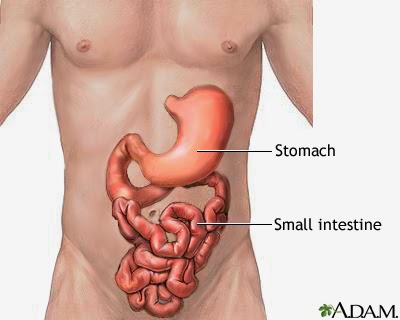
Digestion is a North to South Process

Digestion is a north to south process.  Here is how it works: 


  • Digestion starts in the brain with the sight and smell of food.  This signals the body to start producing salivary amylase (digestive enzyme found in the mouth that starts the breakdown of carbohydrates).   
  • It then continues in the mouth where the mechanical and chemical breakdown occurs.  The mechanical breakdown is the teeth chewing your food into smaller parts.  The chemical part is the salivary glands moisten the food to help with swallowing.  
  • When you swallow, bolus enters the esophagus for passage into the stomach.  The cardiac sphincter at the bottom of esophagus opens to allow bolus to pass into the stomach.  
  •  The stomach continues the mechanical  breakdown of food by churning and massaging the bolus along with a  number of chemical activities.  Bolus mixes with hydrochloric acid to disinfect any food that possibly had any pathogens that could have gotten in via food.  When the
    bolus reaches its specific pH it becomes chyme and leaves the stomach via the pyloric valve.  
  • The chyme enters the duodenum of the small intestine.  If you'v eaten fat the gallbladder will release bile into the duodenum.  The pancreas will release bicarbonate to alkalinize the chyme and will also release digestive enzymes to further breakdown food.  The chyme is now ready to move to a different part of the small intestine, the jejunum and the ilium where it will be absorbed into the blood stream.  
  • Whatever is not absorbed into the blood will to through the illiocecal valve into the large intestine.  In the first portion of the large intestine bile and saliva will by recycled in the ascending colon.  Stools and feces will form in transverse colon into sigmoid colon where it will then be excreted from the body.  


What happens when digestion doesn't work properly: 

  • As a culture we are tend to be in a stressed out state when we consume food.  In order to properly digest food you have to be in a relaxed state also known as a parasympathetic state.   When you are eating on the run or while you are in the middle of work you are not in a relaxed state, also known as a sympathetic state.  When you are eating in a sympathetic state you do not produce enough stomach acid.  Stomach acid is crucial do digestion in the small intestine.  
  • When people eat then tend to be rushed or extremely hungry and do not take the time to thoroughly chew their food.  When food is not chewed all the way through, the amount of saliva produced is hindered.  When the proper amount of saliva is not produced, salvatory amalyse is not produced which starts the breakdown of carbohydrates in your body.   
  • Factors such as stress, refined carbohydrates, nutrient deficiencies, allergies, and excess alcohol consumption can all inhibit hydrochloric acid production.  In order for food to continue with digestion, the pH of the stomach should be between 1.5-3.0.  If the chyme is to alkaline, it stays in the stomach longer and begins to degenerate, pancreatic juices are not released and intestinal problems start to occur. 
  • In the gallbladder when poor quality fats or no fat is consumed the gallbladder fills up with bile and can cause gallstones.  
  • The large intestine deals with the leftover food that is not fully digested, food full of parasites, microorganisms, and undigested fats.  Maldigested food causes dysbiosis and disrupts healthy flora.  Without healthy flora butric acid is not produces which weakens the health of the colon.  This leaves the colon subject to inflammation, diverticula, and loss of tone which can then lead to issues such as IBS, Crohns disease, colitis, and celiac disease .

To avoid any of these issues from occurring, you want to make sure you are properly digesting your food by always eating in a relaxed state, chewing your food all the way through, avoid refined carbohydrates, limit your alcohol intake, and manage your stress.